
Brookhaven Address History Sources
No single roll covers all previous residents of a Brookhaven address. Begin with the source nearest the time in question. Recent ownership is strongest in DeKalb County property and deed records. Printed directories and the public federal census add occupants, spouses, work details, and other household members. Maps and permit files explain when a structure, lot, or road changed.
| Source | Years It Covers | Where Held | What It Shows |
|---|---|---|---|
| LandmarkWeb deed index | 1979 to current | DeKalb Clerk online | Recorded owners and instruments |
| Physical deed books | Earlier years, survival varies | Clerk and Archives microfilm | Grantor and grantee chain |
| Atlanta directories | 1859/60-1922 online; later runs vary | Emory and Decatur Library | Named occupants and work details |
| Federal census | Public through 1950 | NARA and library databases | Households and geography |
| Sanborn maps | 1892, 1899, 1911, 1931, 1951 cited | LOC and GSU | Building footprint and use |
| Project files | Mainly since 2012 | Brookhaven or county request | Work dates and applicants |
A Brookhaven label is not required in an old source. The city incorporated in 2012, so earlier entries may sit under Atlanta, unincorporated DeKalb, a subdivision, or an old road name. Start with the present parcel, then move back by document and date.
Start With Brookhaven Parcel Records
Search the DeKalb property appraisal gateway by address. Copy the parcel ID, current owner, site address, postal address, property description, subdivision or condominium name, and latest deed reference when shown. The site address locates the land. The postal address routes the owner's mail and may be elsewhere.
Next consult DeKalb Property Mapping and Land Records. GIS can connect an address or parcel ID to the newest deed or plat book and page. Staff accept mapping questions at mappingteam@dekalbcountyga.gov. GIS does not provide deed copies, but it supplies the key needed to enter the recorded chain. For a current view of a whole road, use the Brookhaven street directory method.
Note: A homestead indicator supports possible owner occupancy, but it does not identify every person who lived there.
Walk DeKalb Deeds Backward
The DeKalb Clerk's LandmarkWeb index is the core ownership trail. Its online coverage begins in 1979. Search by book and page when GIS provides them, or use party name, parcel ID, instrument number, date, or legal terms. Never join deeds on a similar surname alone. Match the land description each time.
- Open the current owner's acquisition deed and record the grantee, grantor, date, book/page, and land description.
- Take the seller, called the grantor, and search that party as an earlier grantee.
- Confirm that the earlier deed describes the same lot, block, subdivision, or parcel history.
- Repeat through 1979, watching for trusts, estates, business names, splits, and mergers.
- For older transfers, continue at Real Estate or in surviving books and microfilm.
- Grantor and grantee
- The grantor transfers an interest; the grantee receives it.
- Chain of title
- The linked series of recorded transfers for the same land.
- Legal description
- The deed's land identity, often lot, block, subdivision, or metes and bounds. It can outlast a road name.
Deputy clerks assist Monday through Friday, 8:30 a.m. to 4:30 p.m. The office does not research documents by telephone. Call Real Estate at 404-371-2836 for access questions.
Brookhaven Records Before 1979
The web cutoff changes access, not the start of DeKalb land records. Earlier grantor-grantee books may require an office visit, clerk help, microfilm, or archive work. Search the Georgia Archives county microfilm cards before traveling. Their first card can note record starts, disasters, and gaps.
DeKalb County dates to 1822, and the archives notes an 1842 courthouse fire. That does not prove all early deeds vanished. Inspect surviving holdings, later copies, and references quoted in newer deeds. A later instrument can preserve an older book/page or legal description.
Note: Treat the fire date as a reason to inspect the catalog, not as proof of total loss.
Renamed Roads Hide Past Residents
Address text can fail while the land stays the same. In the documented Brookhaven area, Chandler Road became Dresden Drive and Old Decatur Road became Clairmont Road. Archway and Mannville Drives were not built until after World War II. Search both names, then use plats, maps, and legal descriptions to bridge them.
A 1943 directory listed only three residents on the studied Chandler Road stretch from 4072 Peachtree Road toward Old Decatur Road. Maps from 1945 and 1951 show a landscape in change. Brookhaven Heights and Fernwood gave much of the prewar context, while postwar growth drove new subdivisions. Previous residents may first appear in farm deeds, then plats and directories, and later permits and tax cards.
Brookhaven Households Beyond Deeds
Owners and occupants form different trails. The DeKalb Library genealogy guide identifies Atlanta directory microfilm at Decatur Library and digitized volumes from 1859/60 through 1922. Confirmed entry fields include name, occupation, spouse, and employer. Ask staff about later and reverse directories because the public guide has no full year list.
Use directory entries between census years. The 1940 and 1950 censuses give household snapshots, while directories may show annual moves or name changes. A missing name can mean relocation, death, spelling change, a renamed road, or omission. The collections are treated in depth on the Brookhaven city directory page.
- Find the address in a directory near a public census year.
- Record every household name and the road-name form used.
- Locate the census enumeration district, the area assigned to one census taker, and inspect the schedule.
- Compare members with the next directory and the ownership chain.
Map a Changing Brookhaven House
Sanborn fire-insurance maps show footprints, construction, and use, not people. Pair a directory address with the correct sheet and confirm that the place existed in that edition. A digitized 1892 Atlanta volume is online. Research also cites 1899, 1911, 1931, and 1951 Atlanta maps, but Brookhaven-area sheet coverage needs checking.
Later project files can date a new structure, addition, demolition, or major change. Brookhaven records mainly cover the municipal era after 2012, while older files may rest with DeKalb. A permit may name an applicant, owner, or agent and describe the work. It does not prove the named person moved in.
Choose the custodian by the event date. A property now inside Brookhaven may have older permits under DeKalb, especially in an annexed area. LaVista Park joined the city at the end of 2019. A pre-2020 project there may require a county search even though today's map shows a Brookhaven address. Ask for the address, parcel ID, work type, and a bounded date range. This gives staff enough detail to locate an existing file without asking the agency to create a new history.
Close a Brookhaven Resident Trail
When a name disappears, search obituaries and probate before assuming a move. DeKalb Library has newspaper microfilm and HeritageHub. An obituary can identify relatives, a former address, and time of death. DeKalb Probate Court handles wills, administrations, and year's support, so a petition can connect heirs to recorded land.
An heir search works best as a chain of evidence. Use a dated obituary or death record to identify kin, check the probate matter for the estate's legal representatives, and then compare those names with later recorded instruments. A deed executed by an estate or heirs may explain a transfer that a simple owner-name search makes hard to follow. Names, dates, and the legal description should agree before the past residents and the land record are treated as one trail.
The official Georgia Department of Public Health vital-records overview explains how state and county offices share certificate service.
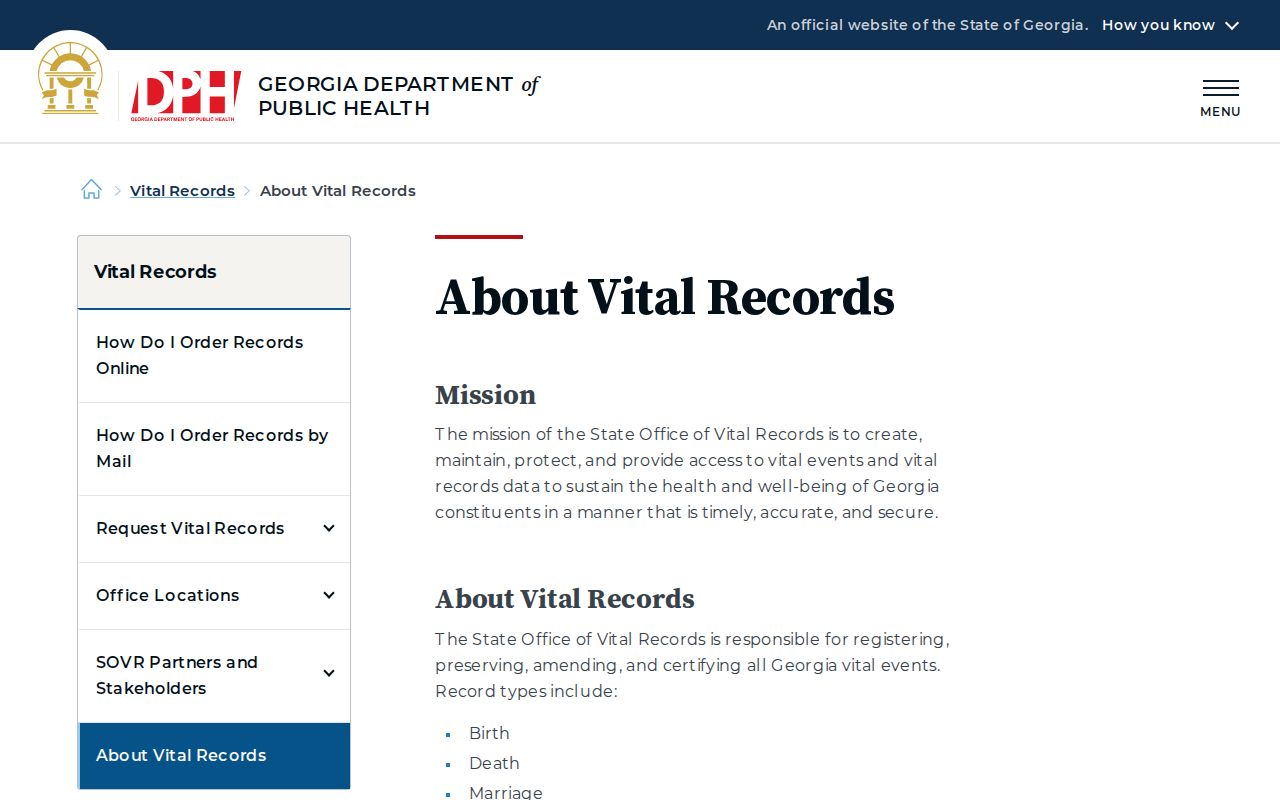
The state overview identifies the state and county certificate routes. Access remains controlled: birth records are confidential until transfer after 100 years, while death and certain marriage or divorce material follows separate 75-year transfer rules and redaction requirements. A restricted certificate does not end the inquiry. A public obituary, newspaper notice, probate index, or later deed may still supply the date and family connection needed for lawful research.
Lawful use. Research previous residents for house history, family history, estates, or personal curiosity. Georgia law does not permit stalking, threats, or harassment.