
Brookhaven Directory Collections by Era
Brookhaven city directory research starts with Atlanta-area collections. Brookhaven was not incorporated until 2012, so no uninterrupted historical shelf exists under its modern municipal heading. Search the city directory volumes by old road, subdivision, Atlanta postal context, and unincorporated DeKalb references. The collection table distinguishes verified year spans from holdings whose dates must be confirmed with staff.
| Collection | Years | Where held | Access |
|---|---|---|---|
| Digitized Atlanta city directories | 1859/60 through 1922 | Emory and Digital Library of Georgia collection | Free online |
| Atlanta directory microfilm | Years not itemized online | Decatur Library, second floor | In person; ask reference staff |
| Georgia vital registers and state census | Surviving runs vary | DeKalb Library genealogy collection and Georgia Archives | Microfilm, catalog, or repository access |
| Federal census schedules | Public through 1950 | NARA and genealogy databases | Free or library database |
| HeritageHub obituaries | Collection spans 1704 to present; title coverage varies | DeKalb County Public Library online resource | Library card and access terms |
| Atlanta Sanborn maps | 1892 online; 1899, 1911, 1931, 1951 also cited | Library of Congress and Georgia State holdings | Online or repository, sheet coverage varies |
The official DeKalb Library guide does not publish a complete post-1922 year list or reverse-directory inventory. Ask for the exact year before planning a visit. The 1899 Atlanta City Directory is documented as a Franklin Printing and Publishing Company volume attributed to H. G. Saunders. No Brookhaven-specific publisher run should be assumed beyond that evidence.
Brookhaven Directories at Decatur Library
The DeKalb County Public Library genealogy guide points researchers to the second floor of Decatur Library, especially Dewey 929 material. Its microfilm and microfiche resources include the Atlanta City Directory, Georgia marriage, divorce, and death registers, Georgia State Census material, DeKalb News Era, Atlanta Constitution, and Atlanta Journal. Those sources are valuable when property ownership and occupant identity diverge.
Ask reference staff for the directory year, format, and any address-arranged volume. Bring old and current street names, a date range, and likely surname spellings. Library holdings can also explain a missing directory entry through an obituary, marriage notice, or news item.
See the library's official genealogy holdings guide.
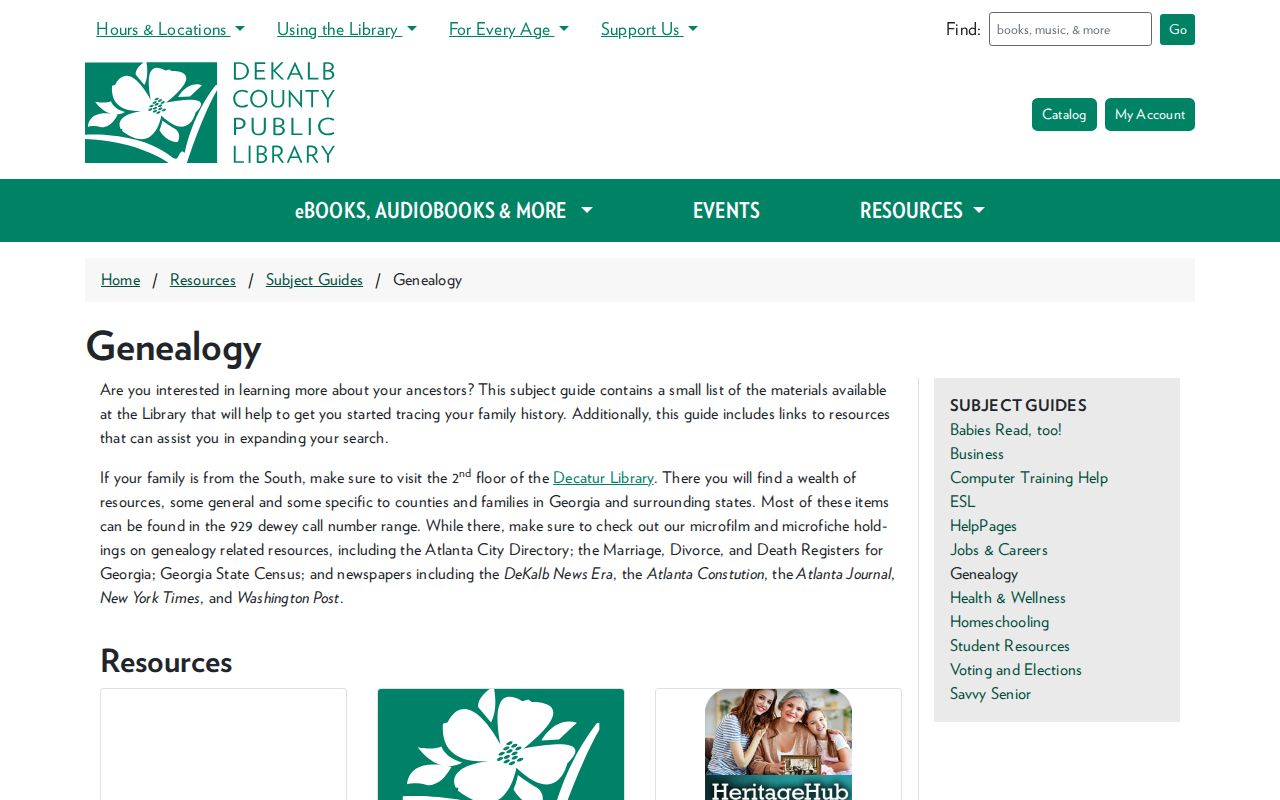
The captured guide places directories, registers, newspapers, and obituary tools within one local research path.
Brookhaven Directory Years Online
The digitized Atlanta directory collection runs from 1859/60 through 1922. DeKalb Library links to it, and the project was created with a Lyrasis Sloan Foundation grant. Search names first, then inspect the scanned page and abbreviation key. Optical text can misread initials, faint type, and columns, so browse nearby pages when a keyword search fails.
Brookhaven's later suburban areas may not appear on the earliest sheets or volumes. Search Atlanta, DeKalb, subdivision names, road names, and variants. A Brookhaven city directory search limited to the present city label will miss much of the historical trail.
Note: The verified online run ends in 1922; later city directory years require a library catalog check or an in-person microfilm search.
Read Brookhaven Directory Entries
The DeKalb guide confirms that Atlanta entries can give a person's name, occupation, spouse, and employer. Residence and business abbreviations may appear, but meanings must be checked against that volume's own key. Do not treat every symbol as stable across publishers or years. Capture the page heading and year with the entry so a later reader can reproduce the find.
| Name | Given name, surname, and initials as printed; preserve spelling variants |
|---|---|
| Occupation | Work description when supplied, useful for separating people with the same name |
| Spouse | Spouse name when the volume includes it, a strong household link |
| Employer | Named business or institution when printed |
| Residence address | House number and street, interpreted with the volume's abbreviation key |
- Criss-cross directory
- An address-arranged volume or section that lists entries by street and house number rather than surname.
- Householder index
- An index centered on people identified with households; its exact scope depends on the publisher and year.
- Abbreviation key
- The volume's own legend for shortened words and symbols. Save it before interpreting an entry.
A directory entry is evidence for a place and time, not proof of a continuous stay. Compare adjacent years and at least one independent record.
Three Brookhaven Names in 1943
A HABS study of the Mann House supplies a rare local directory example. It reports only three residents along the studied Chandler Road stretch in the 1943 Atlanta directory, from 4072 Peachtree Road east or north toward Old Decatur Road. The Mann property was still largely farmland in 1945. Archway and Mannville Drives appeared only after World War II.
That small count captures north DeKalb before rapid postwar subdivision. Growth linked with the 1948 General Motors plant and supplier industry changed the record mix. Farm deeds and road maps give way to plats, annual directories, tax cards, and later building files. Brookhaven Heights and Fernwood offer prewar context, while Georgian Hills reflects late 1940s and early 1950s expansion.
Chandler Road became Dresden Drive, and Old Decatur Road became Clairmont Road. Search both versions. A legal description, subdivision, or map can bridge an address when the modern road name produces no hit.
Map Brookhaven Directory Addresses
Sanborn maps show building footprints, materials, and uses, not resident names. Pair a city directory address with the correct sheet to learn what stood there. The Library of Congress 1892 Atlanta map volume is online. HABS sources also cite Atlanta sheets from 1899, 1911, 1931, and 1951 in Georgia State University holdings. Brookhaven-area coverage must be checked sheet by sheet.
Maps work best after the directory supplies an address. Compare road paths, nearby landmarks, subdivision plats, and legal descriptions. Early Atlanta map coverage may stop before reaching a later Brookhaven neighborhood, which is a coverage limit rather than proof that the address did not exist.
Brookhaven Records Before Directories
The Georgia Archives Virtual Vault provides a route to maps, manuscripts, and government records. Its county microfilm cards are especially useful for older DeKalb work. Search the catalog before traveling to Morrow, note the record series and reel information, then confirm access with the repository.
Open the Georgia Archives Virtual Vault source.
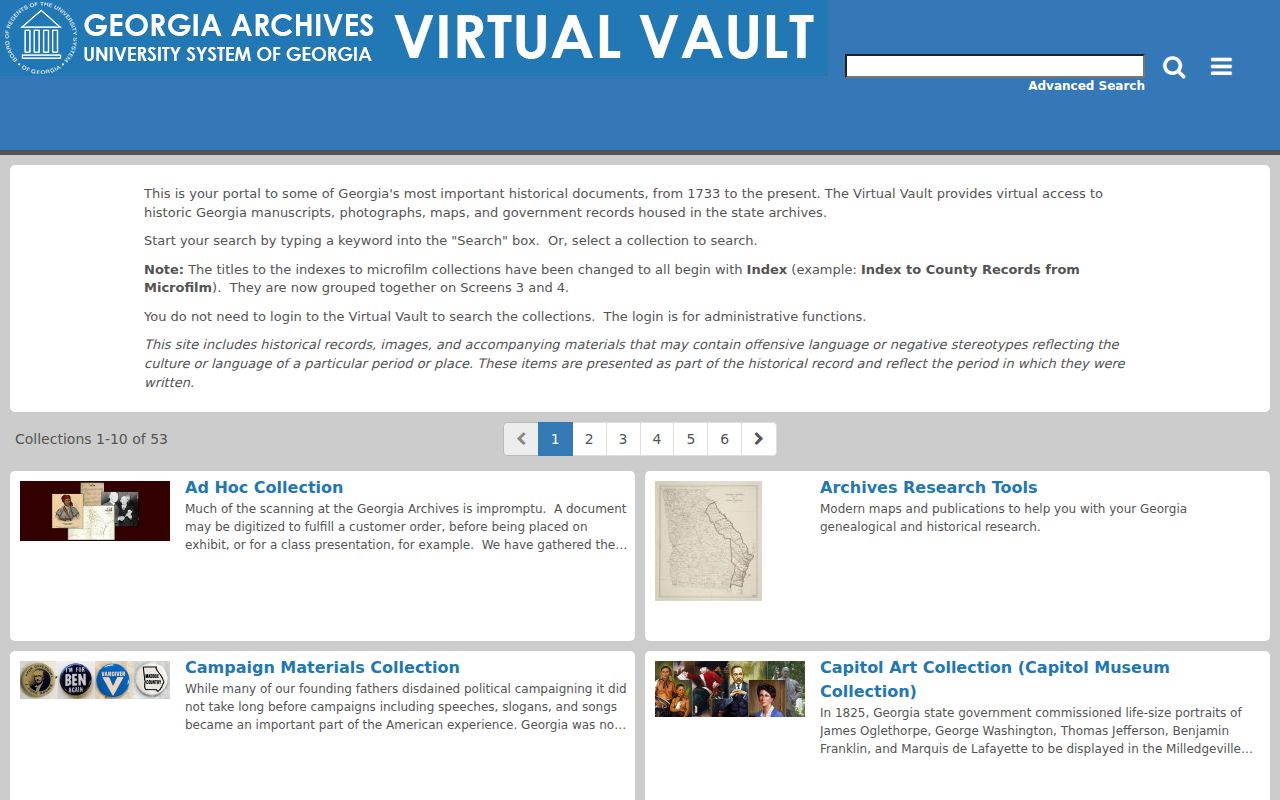
The Vault image shows the broader archive path that supports research before or outside the directory run.
The DeKalb county microfilm-card catalog notes record starts, gaps, and courthouse disasters.
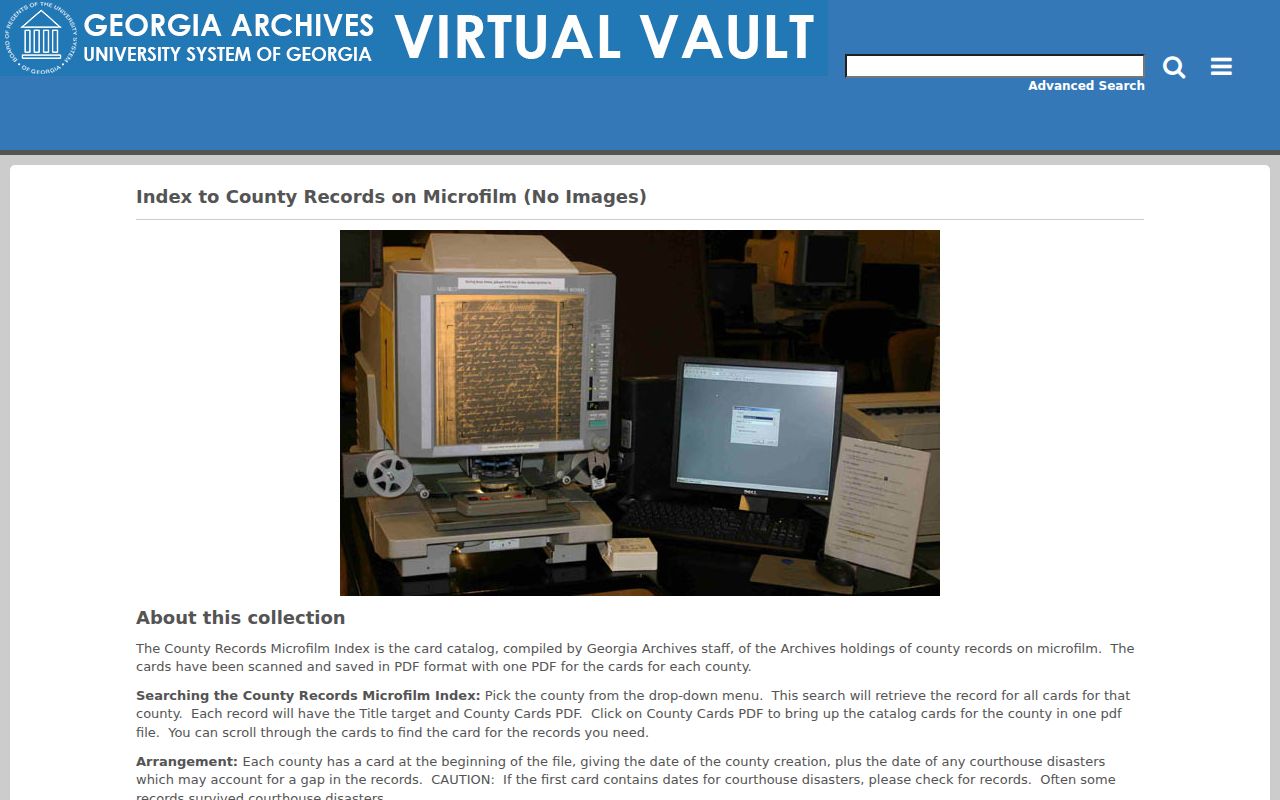
The cards must be read as finding aids. Georgia Archives notes an 1842 DeKalb courthouse fire, but that event does not prove every early record was lost.
Brookhaven Directory Record Timeline
The local trail crosses county creation, Atlanta directory publishing, suburban growth, and city incorporation. These dates help choose the name and keeper most likely to hold a record.
| 1822 | DeKalb County was created, placing early Brookhaven-area records in the county framework. |
|---|---|
| 1842 | A courthouse fire may explain gaps, but surviving books and copies still require inspection. |
| 1859/60 | The verified digitized Atlanta city directory run begins. |
| 1922 | The verified Emory and DLG digitized run ends; later volumes move to library research. |
| 1943 | The HABS-cited Chandler Road entries document a sparse pre-subdivision landscape. |
| 1950 | The newest federal census currently open to the public supplies a household checkpoint. |
| 2012 | Brookhaven incorporated, creating the modern municipal label for later records. |
Before 2012, census place tables may use predecessor geography. Individual schedules and city directory entries follow the address and enumeration terms used at the time.
Trace Brookhaven Families by Directory
City directories can bridge the years between public federal censuses. Begin with a known name, road, or decade. Preserve compound surnames, diacritics, hyphens, initials, and spacing variants. Brookhaven's diverse naming patterns make exact-only searches fragile. A spouse, employer, or address can separate two similar names without relying on assumptions.
- Find the person in the alphabetical section. Save the full entry, page, directory year, and abbreviation key.
- Move one available year at a time. Record changes in spouse, occupation, employer, and address rather than copying only the name.
- Use a reverse or criss-cross volume when available to inspect the street by house number. Ask Decatur Library because exact dates are not listed online.
- Pair 1940 and 1950 directory evidence with the matching public census. A census gives a household snapshot; directories can fill years between snapshots.
- When the entry vanishes, search HeritageHub and newspaper microfilm for an obituary, death notice, marriage notice, or move. Probate can connect kin and estate records.
A disappearance can mean relocation, death, omission, spelling change, or a shift in postal or directory geography. It should not be read alone. Modern address-keyed ownership research belongs in the Brookhaven street directory workflow, while the historical shelf remains the source for dated occupant entries.
Keep a citation for every Brookhaven directory hit: collection name, publication year, page, image number when present, and the exact form of the entry. Then place the evidence on a timeline beside census and newspaper dates. Conflicts become visible quickly. A spouse may remain at an address after another entry disappears, or an occupation may distinguish a move from a same-name substitution.
Oglethorpe University archives, yearbooks, and alumni publications can add institutional context for Brookhaven people. Atlanta History Center's Kenan Research Center may hold metro organization and neighborhood records. Coverage and access require direct catalog confirmation.
Note: Directories identify listed people at a stated time; deeds identify owners, and neither source alone proves every member of a household.